


Ethereum Staking Yield 2025: What to Expect
As we move further into the 2020s, the world of cryptocurrency continues to evolve at an unprecedented pace. With Ethereum transitioning to a proof-of-stake (PoS) model, many are keen to understand the potential yields from staking their Ether (ETH) by 2025. The question on everyone’s mind is: What will the Ethereum staking yield look like in 2025? This article aims to break down the factors influencing staking yield, the potential risks involved, and why it’s essential for investors to stay informed, particularly in the Asian market such as Vietnam.
The Basics of Ethereum Staking
Ethereum staking allows investors to earn rewards for validating transactions on the Ethereum blockchain. By putting their ETH to work, holders can commit to the network’s security and operations, receiving staking rewards in return. The transition to PoS not only aims to enhance efficiency but also helps in reducing the environmental impact associated with mining.
Let’s break it down further:
- What is Staking? – Staking involves locking up a certain amount of ETH to participate in the network’s consensus process.
- How is Yield Calculated? – Yield is typically calculated based on the overall number of validators and the total amount of ETH staked.
- What are the Risks? – Market volatility, smart contract bugs, and regulatory changes can all impact staking profitability.
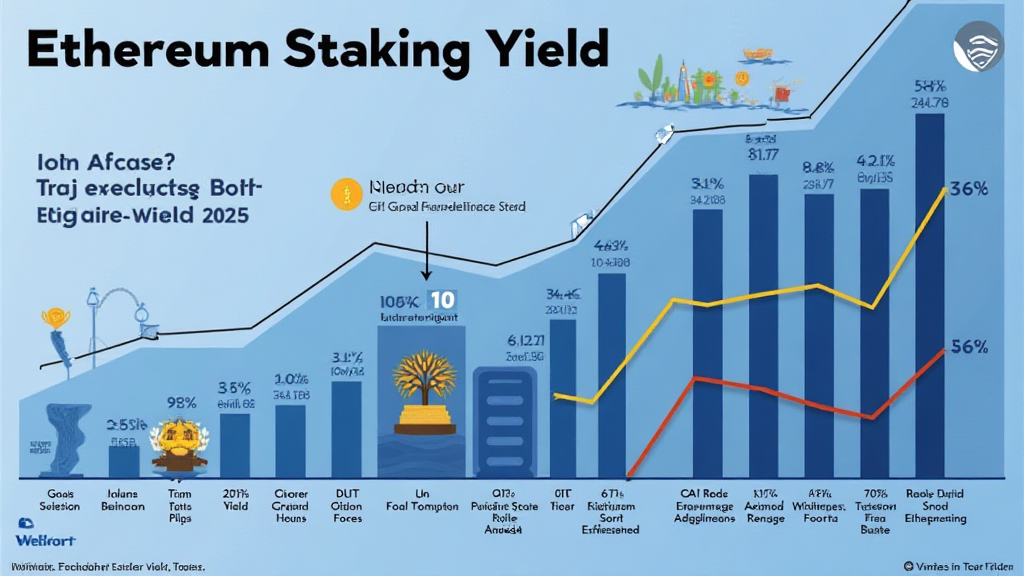
According to industry forecasts, Ethereum staking yield could hover around 5-10% annually by 2025 depending on various factors like network participation and overall market conditions.
Market Trends Influencing Staking Yields
As we look towards 2025, a few key trends will influence the Ethereum staking yield:
1. Increased Adoption of Ethereum
The growth of decentralized finance (DeFi) and non-fungible tokens (NFTs) has led to a surge in Ethereum’s use cases. According to recent statistics, the Ethereum network is handling over 1.2 million transactions per day. Increasing adoption typically drives up staking yield due to higher demand for on-chain transactions and associated fees.
2. Market Volatility
The crypto market is notorious for its volatility. If ETH experiences significant price hikes, staking yield can be substantially affected. For instance, during a bull market, new investors may flock to staking, thereby increasing the total staked ETH, which affects yield mechanics.
However, it’s important to note that while the price of ETH may increase, yield can still fluctuate based on network participation.
3. Regulatory Developments in Asia
As mentioned earlier, Vietnam is witnessing a significant increase in its crypto user base, with a growth rate of 25% year-on-year. Regulatory clarifications from governments across Asia, including Vietnam’s focus on integrating blockchain technology, can propel the legitimacy of staking and, as a result, influence staking yields accordingly.
What to Consider Before Staking Ethereum
Before diving into Ethereum staking, consider the following factors:
- Liquidity: Ensure that you have sufficient liquidity before locking up your ETH for staking.
- Validator Selection: Opt for reputable validators as poorly managed validators can result in losses.
- Diversification: Instead of staking all your ETH, consider diversifying your crypto portfolio.
There are tools like Staking Calculator and platforms such as Coinbase and Lido that can help investors analyze potential yields based on different validator setups and market conditions.
The Regulatory Landscape for 2025
With the growing interest in cryptocurrencies, regulatory bodies worldwide are developing frameworks aimed at fostering innovation while ensuring consumer protection. This can significantly impact the staking process and profitability—it’s essential for investors to keep up with local regulations, especially in rapidly evolving markets like Vietnam.
In Vietnam, regulations are increasingly focusing on the “tiêu chuẩn an ninh blockchain”, which will set benchmarks for security frameworks within the crypto space. Understanding these standards will become critical for staking safely in the future.
Strategies for Maximizing Ethereum Staking Yield
To maximize your Ethereum staking yield by 2025, consider the following strategies:
- Research Validators: Choose validators with a proven track record and low slashing rates.
- Stay Updated with the Market: Follow developments in the Ethereum ecosystem and adjust your staking strategy accordingly.
- Engage with the Community: Participate in forums and discussions to learn from experienced stakeholders in the Ethereum community.
Conclusion
The landscape of Ethereum staking is fluid, with various factors influencing potential yields projected for 2025. The shift towards proof-of-stake heralds numerous opportunities, and for investors willing to navigate the challenges and uncertainties, staking Ethereum offers a promising avenue to grow their portfolios. As we step into 2025, remain vigilant, stay informed, and be prepared to optimize your staking strategies in line with market developments. It’s essential, especially in regions like Vietnam where cryptocurrency is becoming more integrated into the financial ecosystem.
For more information on staking and maximizing your Ethereum investments, visit wavexcoins. Stay updated with the latest trends and insights to realize your crypto investment goals.
About the Author: Dr. Sarah Nguyen, a blockchain analyst and expert in cryptography, has published over 30 papers in the area of blockchain technology and participated in the auditing of several high-profile crypto projects. Her contributions provide valuable insights drawn from real-world applications.


