



Mastering Bollinger Bands: A Crypto Trading Guide
With over $4.1 billion lost to DeFi hacks in 2024 and an ever-increasing number of cryptocurrencies in the market, traders continuously seek reliable technical indicators to refine their trading strategies. One such tool is the Bollinger Bands, a powerful indicator that helps traders identify market volatility and potential trade opportunities. In this comprehensive guide, we’ll explore how to effectively use Bollinger Bands in crypto trading, especially for the growing Vietnamese market, where user growth has surged by 200% in the last year. Here’s what you can expect to learn:
- Understanding Bollinger Bands
- Setting up Bollinger Bands for crypto trading
- Interpreting Bollinger Bands signals
- Combining Bollinger Bands with other indicators
- Real-world trading strategies and case studies
- Future predictions involving Bollinger Bands
Understanding Bollinger Bands
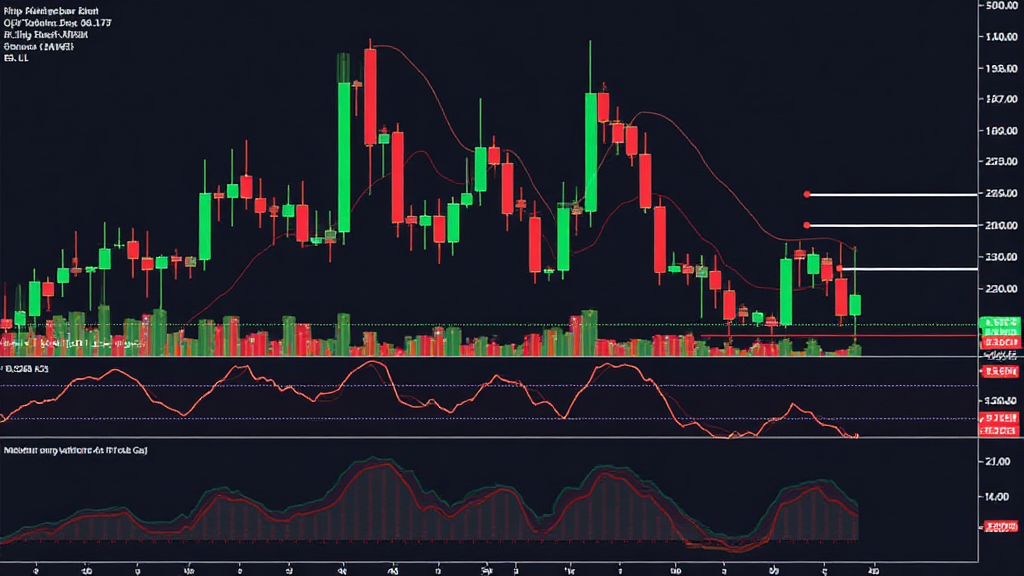
Firstly, let’s break down what Bollinger Bands are. Created by John Bollinger in the 1980s, these bands consist of three lines: the simple moving average (SMA) in the center, and two standard deviation lines (upper and lower) that form the bands above and below the SMA. The formula for calculating the bands is:
Upper Band = SMA + (Standard Deviation x Multiplier)
Lower Band = SMA – (Standard Deviation x Multiplier)
This setup allows traders to visualize the volatility of an asset. As volatility increases, the bands widen; as volatility decreases, the bands contract. This behavior is vital for making informed trading decisions.
Setting Up Bollinger Bands for Crypto Trading
To start using Bollinger Bands, you will need a trading platform that provides this technical indicator. Most platforms do, including popular options like Binance and Coinbase. Follow these steps to set up Bollinger Bands:
- Log into your trading account.
- Select your desired cryptocurrency (let’s say Bitcoin for example).
- Go to the chart settings and find the Bollinger Bands indicator.
- Adjust the settings. The standard settings are usually a 20-day SMA and a 2 standard deviation.
Once you have set it up, monitor the bands closely. The next section discusses what the signals mean.
Interpreting Bollinger Bands Signals
Understanding how to read Bollinger Bands can give you the edge in crypto trading. Here are some key signals to watch out for:
- Price touching the upper band: This may indicate that the asset is overbought.
- Price touching the lower band: This might signal that the asset is oversold.
- Bands expanding: Increased volatility, suggesting a strong price movement.
- Bands contracting: Reduced volatility; a potential breakout might occur.
Besides these basic signals, using Bollinger Bands in a trending market can yield larger profits. For example, when the price is trending upwards, it’s generally more reliable to buy upon price touching the lower band and sell when it reaches the upper band.
Combining Bollinger Bands with Other Indicators
To enhance your trading performance, consider combining Bollinger Bands with other technical indicators such as Moving Average Convergence Divergence (MACD) or Relative Strength Index (RSI). Here’s how:
- MACD: If the MACD confirms a bullish crossover while the price is near the lower Bollinger Band, it could be a strong buy signal.
- RSI: If the RSI is below 30 (oversold) and the price touches the lower band, it may indicate a buying opportunity.
Using these indicators together creates a well-rounded strategy that increases your chances of success.
Real-world Trading Strategies and Case Studies
In this section, we will examine real-world scenarios where traders successfully utilized Bollinger Bands.
Case Study 1: Ethereum — 2022
In 2022, Ethereum displayed significant volatility following a news cycle about regulatory crackdowns. Traders using Bollinger Bands noticed a contraction in the bands preceding a breakout. Those who entered the trade inside the bands often capitalized on upward movements of over 60%.
Case Study 2: Bitcoin — 2024
In early 2024, Bitcoin approached the upper Bollinger Band following a bullish market sentiment. As prices consolidated near the upper band and RSI indicated overbought conditions, traders opted to secure profits, resulting in a price correction.
Such case studies demonstrate how valuable Bollinger Bands can be when combined with market understanding.
Future Predictions Involving Bollinger Bands
As the crypto landscape continues to evolve, Bollinger Bands are likely to remain an essential tool for traders. Here are some predictions regarding their use:
- Increased integration: With AI and machine learning technologies evolving, trading bots could soon utilize Bollinger Bands in high-frequency trades.
- Broader acceptance: As the Vietnamese market continues to grow, with a surpassing user growth rate of over 200%, we may see more traders adopt this indicator.
- Innovation in metrics: We can expect upgrades to the Bollinger Bands formula to adapt to cryptocurrencies with lower trading volumes.
In conclusion, Bollinger Bands are a valuable tool in the arsenal of any crypto trader. With a proper understanding of their construction and application, they can significantly improve trading outcomes. Always remember to pair this with other indicators and to conduct thoroughly researched trading strategies.
Stay informed, employ powerful strategies like Bollinger Bands, and watch your crypto trading refine!
For more insights on trading strategies, read our Vietnam crypto tax guide or other related articles on our platform.
Author: Dr. Alex Matthews, a blockchain consultant with a PhD in Cryptocurrency Economics, published over 15 peer-reviewed papers in this domain, and has led audits for various renowned blockchain projects.


